
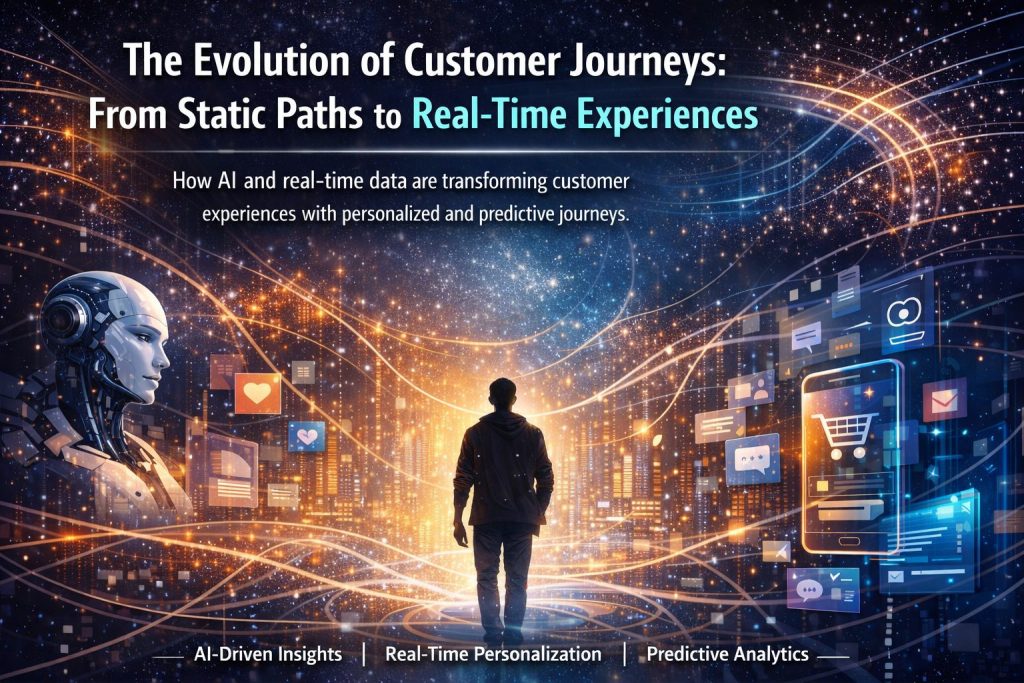
Customer journeys have undergone a dramatic transformation in the last decade. What once followed a predictable sequence has evolved into a fluid, constantly shifting experience shaped by instant access to information and rising customer expectations. In this environment, static journeys built on assumptions no longer deliver the relevance people expect. AI and real-time data have emerged as the tools capable of matching this new pace.
The Shift From Traditional to Dynamic Customer Journeys
Traditional customer journey mapping relied heavily on predefined stages and assumed linear movement from one touchpoint to another. But today’s customer moves unpredictably across channels: researching on mobile, switching to desktop, engaging through chat, and completing a purchase in-store. These behaviors form a network of interactions influenced by mood and device. Companies can no longer rely on historical data or broad personas alone. Modern customer journeys must adapt in real time and respond immediately to intent signals rather than planned timelines.
AI As The Engine Behind Modern Customer Experiences
AI fills the gap between unpredictable customer behavior and the need for relevant responses. Machine learning models analyze massive datasets to uncover patterns humans cannot detect at scale. These models predict what customers might need next—whether they’re primed for conversion, at risk of leaving, or likely to need support.
Natural Language Understanding (NLU) powers chatbots and service tools capable of understanding customer questions with greater accuracy. AI also supports self-service portals by analyzing intent. It helps guide customers to solutions faster. In sales and marketing, AI evaluates behavior to recommend the next best action or content tailored to the individual’s preferences. This intelligence allows businesses to anticipate rather than react.
Real-Time Data As The Fuel
AI cannot function effectively without real-time data. Modern customer journeys depend on up-to-the-second information pulled from apps, websites, CRM systems, email interactions, call center notes, connected devices, and third-party platforms. Every click becomes a signal that helps AI determine where the customer is in their decision process.
This data flows into unified customer profiles, which evolve with every new interaction. Real-time updates enable event-triggered journeys such as sending a support follow-up immediately after a failed login attempt or offering a discount when a customer abandons a cart. Instead of working with stale historical data, businesses can respond to what the customer is doing right now.
Hyper-Personalization At Scale
Hyper-personalization goes beyond using someone’s name in an email. It involves delivering recommendations that reflect a customer’s most recent actions and predicted needs. AI-driven segmentation analyzes behavior and interests to group customers dynamically, rather than locking them into static categories.
This allows experiences to shift continuously. A customer browsing a product category receives content tailored to that interest; if they switch behavior patterns, the system adapts instantly. Hyper-personalization ensures each touchpoint feels relevant without manual intervention, which creates a journey that feels custom-built for each individual.
Real-Time Customer Journey Orchestration
Customer journey orchestration coordinates interactions across platforms to ensure every message aligns with the customer’s position in the journey. AI and real-time data make this orchestration possible by determining the best channel and content for each interaction.
For example, a customer who browses a product online may receive an SMS reminder if they have opted in, or a personalized email if that is their preferred channel. If they call customer support seconds later, the agent can see the customer’s latest activity and pick up the conversation seamlessly. This eliminates fragmented experiences and ensures the journey moves with the customer.
Predictive Intelligence For Better Decision-Making
Predictive intelligence helps businesses go beyond reacting to customer behavior. AI-driven predictive models score leads based on the likelihood to identify potential churn before it happens, and forecast what customers might need next.
For sales teams, predictive scores focus attention on high-quality opportunities. For service teams, churn signals trigger proactive outreach before frustrations escalate. Predictive insights optimize resources and make faster decision-making across the entire customer lifecycle.
Enhancing Customer Support With AI and Real-Time Signals
Customer support is one of the areas where AI and real-time data deliver immediate impact. Intelligent routing sends cases to the right agent based on urgency, reducing handling time and improving issue resolution. AI-powered recommendations guide service reps by suggesting knowledge articles or solutions based on similar historical cases.
Real-time signals can trigger proactive support. If a customer repeatedly encounters errors in an app, a support notification can be triggered automatically, sometimes before the customer asks for help. These capabilities shift support models from reactive problem-solving to proactive customer care.
Building Trust With Transparent AI
As AI becomes central to customer journeys, trust and transparency become critical. Ethical use of data is essential—customers need to know what information is being collected and how it’s being used. Over-personalization can feel intrusive if not handled carefully, so businesses must strike a balance between helpful and overbearing.
Ensuring AI decisions are explainable is equally important. Customers—and regulatory bodies—expect clarity around automated decisions, especially when AI influences financial services, healthcare, or access to critical services. Aligning AI practices with compliance standards reinforces long-term trust.