
There is a particular kind of stress that operations leaders know well. It is the moment you find out something has gone wrong and you realise you had no idea it was coming. Just a problem, fully formed, sitting on your desk first thing in the morning. That feeling is not just frustrating. It is expensive. And for businesses in manufacturing, retail, and logistics, it is also increasingly avoidable.
The honest truth is that most businesses today are not short on data. They have sensors, systems, dashboards, and spreadsheets. What they are short on is connected and actionable information. It is the kind of information that tells you something useful before the crisis lands rather than after it. That is what a genuine technology strategy for visibility and risk management is designed to fix. It is about making sure the information flowing through your operation is actually working for you.
Using IoT for Real-Time Operational Visibility
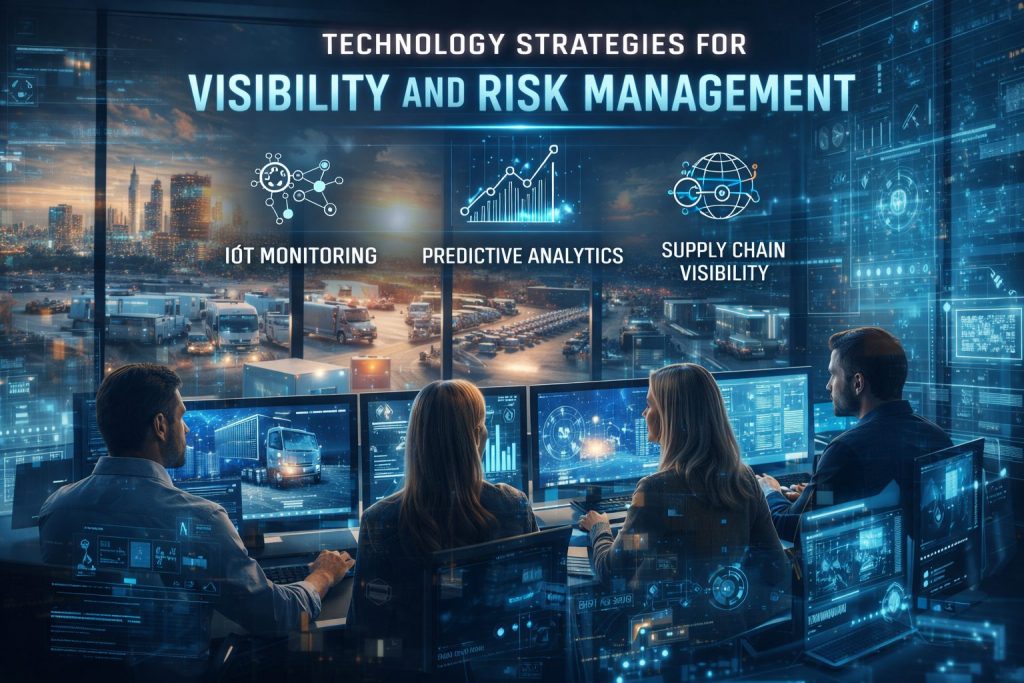
Let us start with IoT, which stands for Internet of Things. In plain terms, it means physical devices fitted with sensors that send live data to a central system. Think of it as giving your operation a nervous system.
Rather than waiting for a machine to break down and halt a production line, IoT sensors in manufacturing can track things like temperature, vibration, and output rate in real time, flagging unusual patterns before they become failures.
In logistics, the same principle applies to vehicles and cargo. GPS tracking, weight sensors, and cold-chain monitoring systems can tell you exactly where a shipment is, whether the temperature inside a refrigerated container has drifted, and whether a delivery is running behind schedule before anyone picks up the phone to ask.
The shift this creates is significant. Instead of finding out when something goes wrong, you find out when something is about to go wrong, which is a powerful advantage in risk management and operations.
A manufacturer that can schedule maintenance around a predicted failure loses a planned hour of downtime. One that discovers the failure after it happens can lose a day or more.
From Data to Decisions: The Role of Predictive Analytics
Collecting data through IoT is only the first step. The second is making sense of it, and that is where predictive analytics in business comes in.
Predictive analytics means using historical data patterns to make forecasts about what will happen next. It is data-driven decision making at scale.
For a retailer, this might mean the system noticing that a particular product sells out every year in the third week of November and automatically triggering a reorder in advance. For a manufacturer, it might mean recognising that a specific machine slows output before it needs servicing. For logistics companies, predictive analytics in supply chain management can identify high-risk routes and enable proactive rerouting.
The important thing to remember is that insight is only valuable if someone acts on it. Data sitting in a dashboard that no one checks is a very expensive filing cabinet.
Part of building a strong operational visibility strategy is ensuring that the right information reaches the right people at the right time, along with clear next steps.
Supply Chain Visibility and Vendor Risk Management
Visibility does not stop at your door. One of the most overlooked sources of operational risk is the vendor ecosystem — your suppliers, carriers, and third-party partners.
The reality is that many disruptions begin outside the organisation. A delayed supplier or unavailable raw material can quickly impact operations. This is why supply chain visibility and vendor risk management are critical.
Managing this risk starts with:
- Shared data agreements with suppliers
- Tracking delivery performance using scorecards
- Automated alerts for missed milestones
It also requires evaluating dependency risks. If your business relies on a single supplier for a critical component, it creates vulnerability.
A strong vendor management strategy includes diversification and contingency planning to reduce disruptions.
Building Operational Resilience Through Technology
All of this — IoT, predictive analytics, and vendor visibility — feeds into a larger goal: operational resilience.
Operational resilience means building a business that can absorb disruption and continue functioning effectively.
There are three key pillars:
1. Redundancy
Having backup options ready, including alternative suppliers, buffer stock, and failover systems.
2. Agility
The ability to make fast, informed decisions when conditions change. This depends heavily on real-time data visibility.
3. Visibility
The foundation of everything. Businesses that detect risks early can respond effectively, while those that react late are forced into damage control.
A useful way to think about it is this: operational visibility is a competitive advantage. Businesses that can see clearly across operations, supply chains, and vendor networks are better positioned to handle uncertainty.
Turning Visibility Into a Competitive Advantage
Technology alone does not solve risk. What matters is how businesses use it to create actionable insights and proactive decision-making systems.
A well-designed technology strategy for visibility and risk management ensures that data is not just collected, but actually used to prevent disruptions, reduce costs, and improve efficiency.
At Sarla Consulting, we help manufacturing, retail, and logistics businesses build connected technology ecosystems — from data collection to real-world decision making.
If you are wondering where your visibility gaps are, that is usually the best place to start.