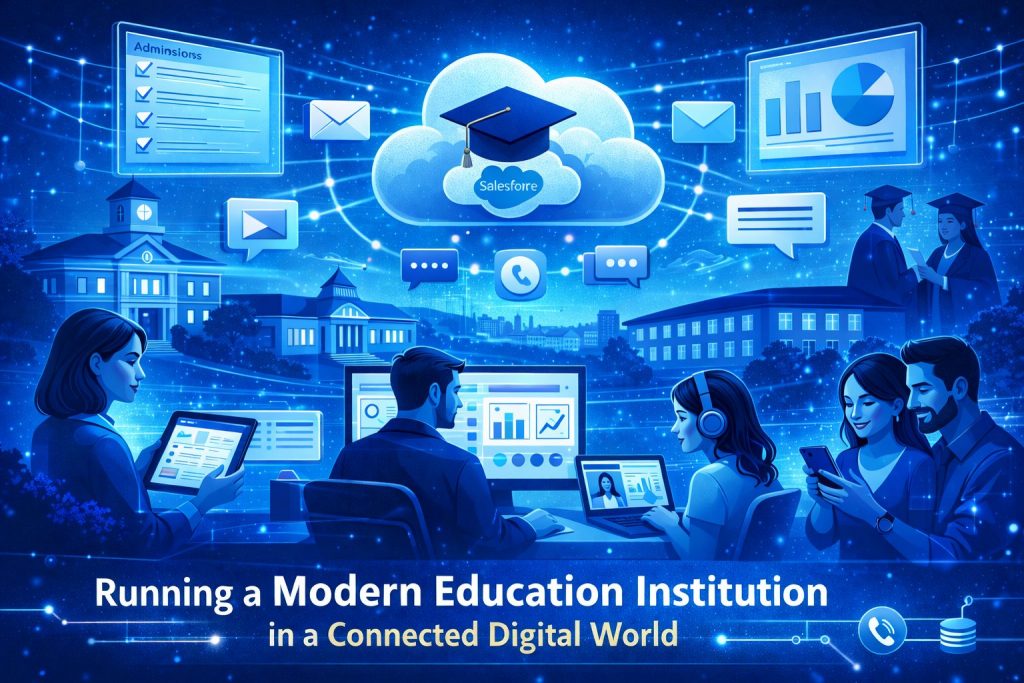
Educational institutions today operate in a world that feels more connected than ever before. Students expect quick responses, parents look for transparency, and staff juggle multiple responsibilities at once. Behind the scenes, education technology systems play a major role in keeping everything running smoothly. Yet many institutions still rely on disconnected platforms that make everyday work harder than it needs to be.
Platforms like Salesforce for education are helping institutions rethink how they manage data through a more unified, student-centric approach.
The Everyday Reality of Education Institution Operations
Running a modern education institution involves far more than classrooms and course schedules. Multiple departments work simultaneously to ensure smooth institutional functioning. Admissions, academics, administration, and support services must stay aligned in a fast-moving environment where coordination is critical.
In many cases, teams rely on separate tools to complete their work. One department may use spreadsheets, another depends on email threads, while others manage records in isolated systems. Over time, this creates data silos and limits visibility. Staff spend more time searching for information instead of engaging with students, while expectations for seamless experiences continue to rise.
Where Education Technology Starts to Feel Disconnected
Information Spread Across Multiple Systems
One of the most common challenges in education management is fragmented data. Student enquiries may exist in one system, academic records in another, and communication histories somewhere else. When a student or parent reaches out, staff often need to check multiple platforms just to understand the full context. Even simple tasks become time-consuming without a centralized student data system.
Communication Moves Faster Than Legacy Systems
Students and parents now communicate via email, phone calls, chat tools, and social platforms. Expectations for quick and consistent responses have increased significantly. Without a unified communication platform, messages can be missed, delayed, or repeated—leading to frustration for both staff and families.
Institutional Growth Adds Operational Complexity
As institutions expand programs or introduce hybrid and digital learning models, operational complexity grows. Systems that once worked well may struggle to scale. What begins as a manageable setup gradually turns into manual workarounds, increasing administrative burden and limiting efficiency.
Rethinking Student Relationship and Data Management in Education
Instead of adding more disconnected tools, institutions are beginning to rethink how their technology ecosystem works together. The goal is not simply digitization, but creating a connected education management system that provides a complete view of the student journey.
Salesforce brings admissions data, communication history, and engagement insights into a single platform. This allows teams to understand each student as part of a continuous lifecycle rather than isolated touchpoints. Decision-making becomes clearer, faster, and more informed.
The true value lies in transforming scattered data into actionable insights. Real-time visibility into enrollment trends and engagement patterns helps leadership plan more strategically and respond proactively.
Designing Connected Experiences for Students and Staff
Admissions as a Guided Student Journey
The admissions process can feel overwhelming for applicants and staff alike. With structured workflows in a connected CRM system, enquiries move smoothly from first interaction to enrollment. Teams gain clarity on applicant status, while students receive timely updates that reduce uncertainty and improve trust.
Consistent and Context-Aware Communication
A connected platform ensures communication remains consistent across channels. Whether a student reaches out via phone, email, or an online form, staff can view the entire conversation history in one place. This continuity strengthens relationships and avoids repetitive interactions.
Smarter Administration Through Automation
Automation plays a powerful role in modern education operations. Routine reminders, updates, and follow-ups can run in the background, freeing staff to focus on meaningful student engagement. Administrative work becomes more intentional, efficient, and aligned with academic goals.
The Role of Strategic Technology Consulting in Education Transformation
Technology adoption alone does not guarantee success. Institutions need a clear strategy that aligns systems with long-term educational objectives. This is where Sarla Consulting adds value. Our approach begins with understanding how teams actually work before designing solutions that support scalability and growth.
Thoughtful planning ensures systems remain flexible as institutional needs evolve. Strong governance and ongoing support reduce disruption and help teams adapt confidently. Transformation becomes about building a sustainable digital foundation rather than replacing tools.
How Data Visibility Improves Education Leadership Decisions
When data is scattered, leadership often relies on delayed reports or assumptions. A connected education CRM provides real-time dashboards that reveal enrollment trends, engagement metrics, and operational performance.
This visibility encourages collaboration across departments. Admissions teams, academic staff, and administrators begin working from shared insights instead of isolated data. Information becomes a common language that supports confident, data-driven decision-making.
Preparing Education Institutions for the Future of Learning
Education continues to evolve through hybrid learning, online programs, and changing student expectations. Institutions with flexible and connected technology foundations are better prepared to adapt. A unified ecosystem supports smoother program launches and enables innovation in learning delivery and communication.
As students increasingly view education through the lens of experience and service, institutions must balance academic excellence with operational efficiency. Platforms like Salesforce, guided by partners such as Sarla Consulting, help institutions maintain this balance while staying true to their mission.
Conclusion: Building a Connected Foundation for Modern Education
Modern education institutions are complex organizations built on relationships and data. When technology feels disconnected, even the most dedicated teams struggle to meet growing expectations. A connected approach brings clarity to operations and empowers staff to focus on students rather than administrative challenges.
By unifying systems and designing experiences around people, institutions can create environments where students feel supported and teams feel confident. The journey toward a connected education institution is about building a future-ready foundation—one that enables growth, adaptability, and purpose.